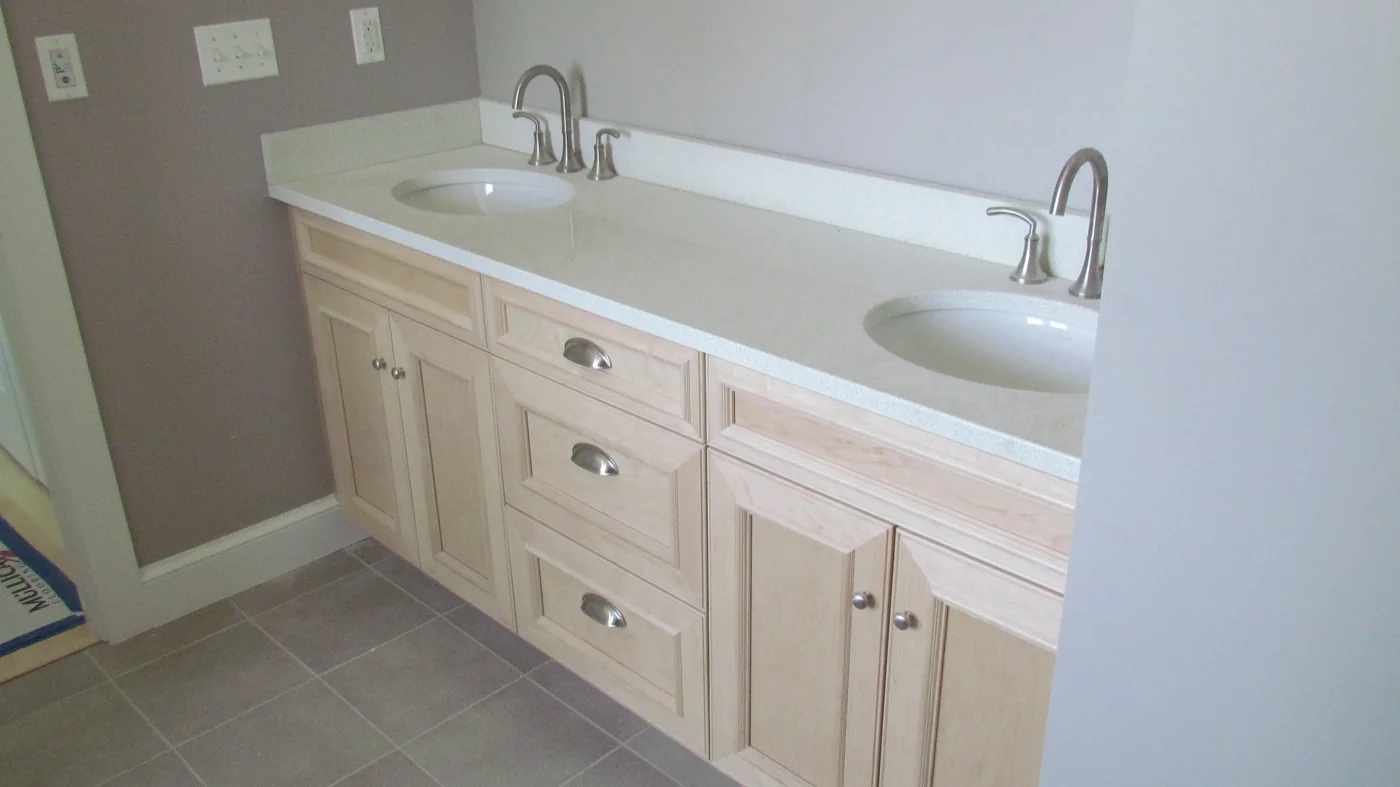
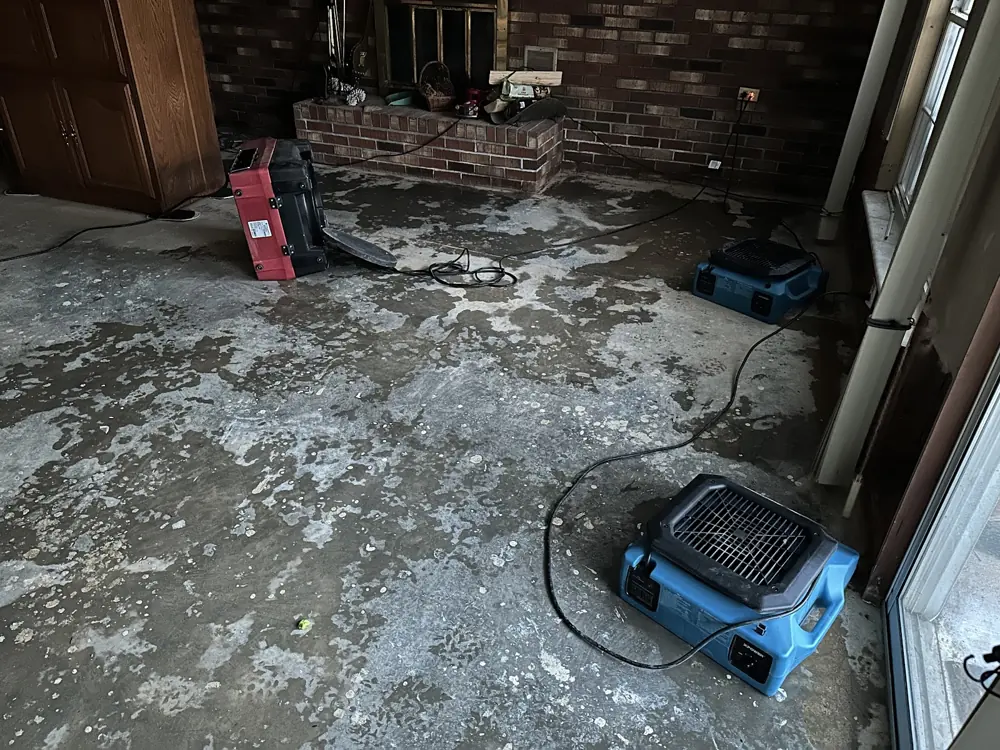
A stopped-up bathroom sink left running for even a short time can overflow the vanity, soak the tile floor, and drip into the room below in a two-story San Mateo home. A crew is typically on site within about an hour to extract and start drying before it spreads further.

A crew typically arrives within about an hour to confirm the overflow has stopped and check for damage to the floor below if the bathroom is upstairs.
Standing water is extracted from tile, vinyl, or laminate flooring and from inside the vanity cabinet before it soaks further into the subfloor.
If the bathroom sits above another room, the ceiling below is inspected and moisture-mapped, with drywall opened only where readings confirm trapped water.
Air movers and dehumidifiers dry the vanity base, subfloor, and any affected ceiling cavity, with moisture readings confirming the structure is dry before closing the job.

While help is on the way, these first steps, done only where it is safe, limit the damage and protect the insurance claim.
Shut the supply off at the source, or close the home's main valve if the source is not obvious. Stopping the flow limits the damage more than anything else.
Switch off electricity to the affected area, but only if the breaker can be reached without standing in or touching the water.
Get a crew dispatched right away. The sooner extraction and drying begin, the more flooring, drywall, and belongings can be saved.
Take photos and a short video of the water and the affected rooms before anything is moved, so the insurance claim starts strong.
Bathroom sink overflow cleanup in San Mateo typically runs from about $350 to $1,800, with the range driven mainly by whether the water reached a ceiling or wall cavity below. A contained overflow on tile with quick extraction sits on the low end, while an upstairs overflow that soaked a downstairs ceiling and drywall runs higher due to the extra drying and repair work. Sudden overflows are commonly covered under a standard homeowner policy, and the crew documents readings and photos for direct submission to the insurer.
Crews reach San Mateo and San Mateo County fast, from North Central, Hayward Park, and Aragon to Shoreview, Sunnybrae, and Hillsdale, plus nearby Foster City, Burlingame, and Belmont. See the full list on the areas served across San Mateo page.
See all areas servedEvery loss is photographed, measured, and logged from the first visit, so the paperwork holds up with the insurance carrier.
Technicians follow recognized IICRC drying standards and prove it with daily moisture readings on San Mateo homes, not guesswork.
Emergency dispatch any hour of the day or night, with a real crew on the way across the mid-Peninsula, not a callback in the morning.
A real crew dispatched any hour, not a callback in the morning.
Trained technicians following recognized IICRC drying standards.
Truck-mounted, portable, and submersible for any size loss.
The loss is documented and billed to the carrier directly.
Yes, especially in two-story San Mateo homes where an upstairs bathroom sits above living space. Water can travel through subfloor and insulation and show up as a stain on the ceiling below within an hour or two.
Not always. If the cabinet is dried quickly, solid wood construction can often be saved. Particleboard cabinet bases that stay wet longer are more likely to swell and need replacement.
A missing stain does not mean no water got through. Moisture meters are used to check the ceiling and cavity even when nothing is visible yet, since damage can show up days later.
Overflow from a sink is generally treated as clean water, unlike a toilet overflow, so drying in place is more often possible when the response is fast.
Sudden, accidental overflows are commonly covered under a standard homeowner policy, and documented moisture readings and photos support a direct claim submission.
San Mateo crews are on call 24 hours a day, local and fast, and can be on the way within the hour.
Call (650) 281-0978