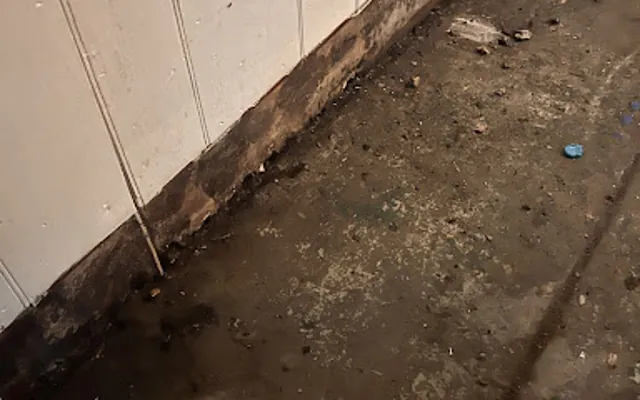
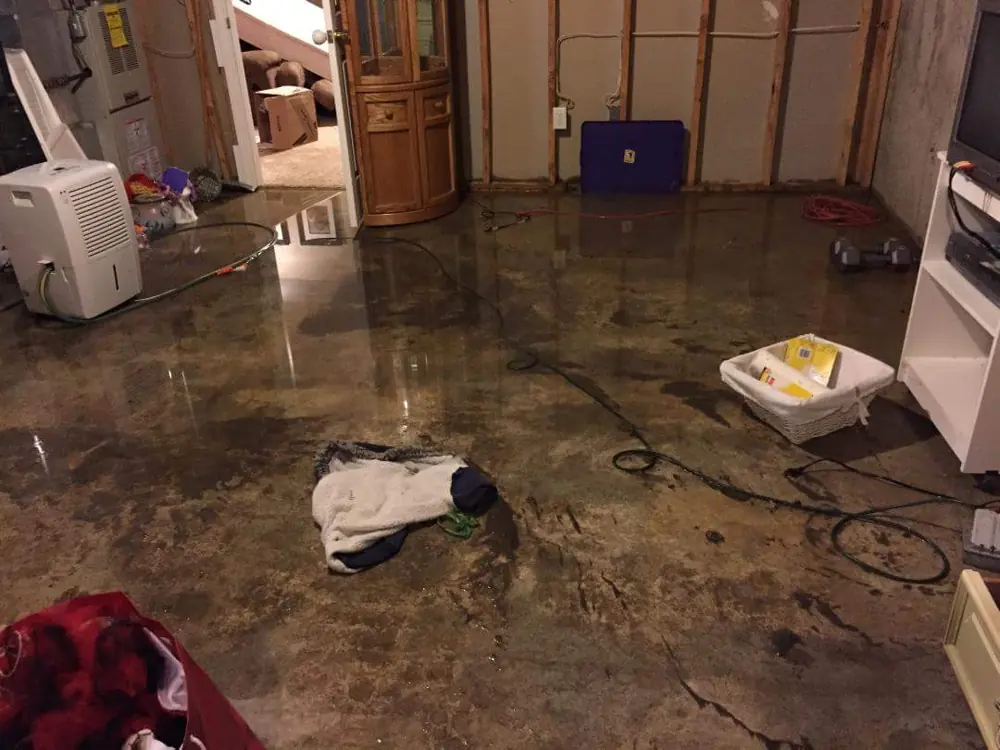
Most of San Mateo runs on the municipal sewer system, so a septic backup is less common here than in rural areas, but it still happens on larger unincorporated and hillside lots nearby. When it does, a crew is typically on site within about an hour to contain and clean it up.

A crew is typically on site within about an hour to contain the contaminated water and keep it from spreading to unaffected rooms.
Standing water is extracted and any porous material it reached, including carpet, pad, and lower drywall, is removed rather than dried in place.
Affected surfaces and framing are cleaned and sanitized to industry standard, since septic backup water carries a high contamination load.
The space is dried to a verified moisture target with full documentation, and the homeowner is pointed toward a septic service for tank pumping or drain field repair.

While help is on the way, these first steps, done only where it is safe, limit the damage and protect the insurance claim.
Shut the supply off at the source, or close the home's main valve if the source is not obvious. Stopping the flow limits the damage more than anything else.
Switch off electricity to the affected area, but only if the breaker can be reached without standing in or touching the water.
Get a crew dispatched right away. The sooner extraction and drying begin, the more flooring, drywall, and belongings can be saved.
Take photos and a short video of the water and the affected rooms before anything is moved, so the insurance claim starts strong.
Septic backup cleanup typically runs from about $800 to $4,000, with the range depending on how many rooms were affected and how much material had to be removed due to contamination. A single bathroom backup on a hard-surface floor sits on the lower end, while a backup that reached carpeted living space or a finished lower level runs higher. This figure covers structural cleanup only, not tank pumping or drain field repair, which a septic service handles separately, and documented cleanup work can typically be submitted directly to the homeowner's insurer.
Crews reach San Mateo and San Mateo County fast, from North Central, Hayward Park, and Aragon to Shoreview, Sunnybrae, and Hillsdale, plus nearby Foster City, Burlingame, and Belmont. See the full list on the areas served across San Mateo page.
See all areas servedEvery loss is photographed, measured, and logged from the first visit, so the paperwork holds up with the insurance carrier.
Technicians follow recognized IICRC drying standards and prove it with daily moisture readings on San Mateo homes, not guesswork.
Emergency dispatch any hour of the day or night, with a real crew on the way across the mid-Peninsula, not a callback in the morning.
A real crew dispatched any hour, not a callback in the morning.
Trained technicians following recognized IICRC drying standards.
Truck-mounted, portable, and submersible for any size loss.
The loss is documented and billed to the carrier directly.
No. Most San Mateo properties are connected to the municipal sewer system. Septic systems are more typical on larger unincorporated and hillside lots in nearby Peninsula communities.
No. Cleanup covers extracting, sanitizing, and drying the affected structure. Tank pumping and drain field repair are handled by a septic service, and the crew can point a homeowner toward that next step.
It carries the same category of contamination concern, since it has been in contact with waste, so affected porous materials are treated the same way, with removal rather than drying in place.
Hard flooring like tile can often be sanitized and kept. Carpet, pad, and other porous flooring that contacted contaminated water are typically removed rather than cleaned in place.
Coverage varies by policy, and some homeowner policies require a separate backup endorsement. Documented moisture readings and photos are prepared either way so the homeowner can submit a claim if coverage applies.
San Mateo crews are on call 24 hours a day, local and fast, and can be on the way within the hour.
Call (650) 281-0978