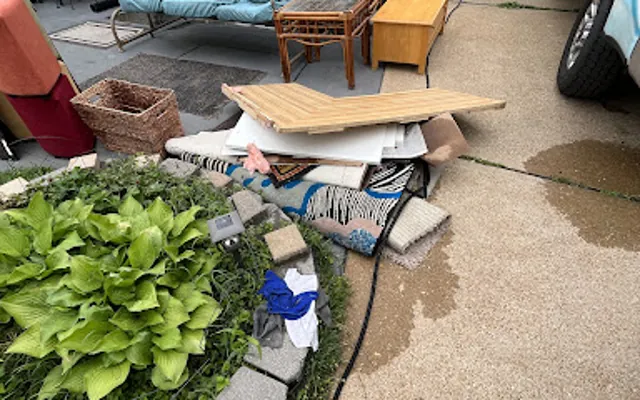
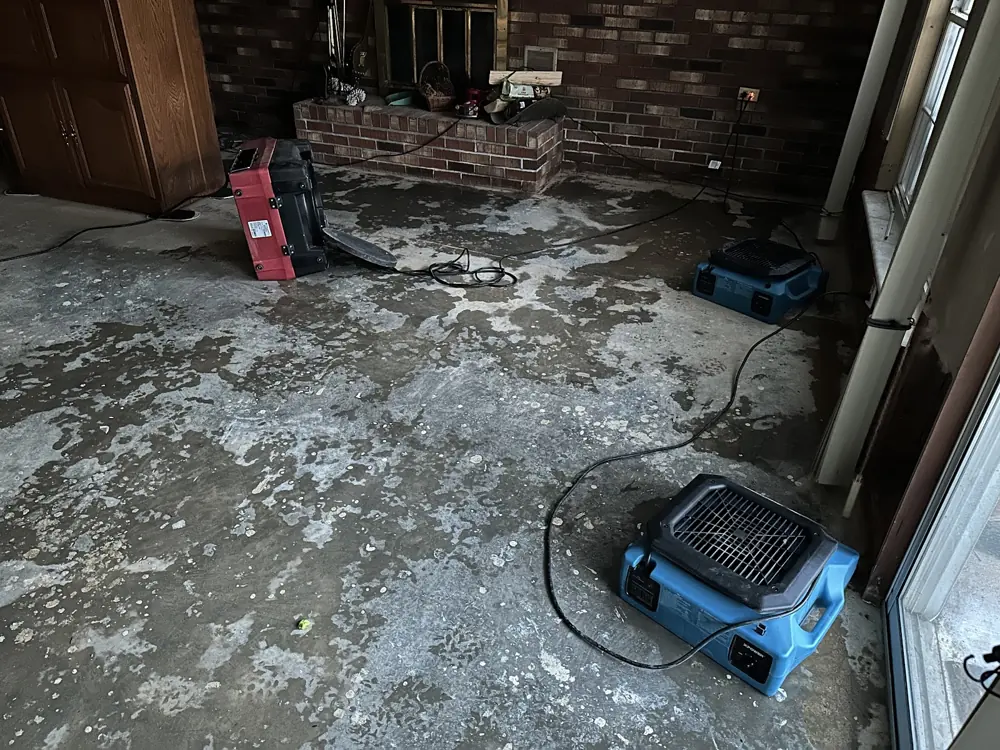
When an aging city main lets go under a San Mateo street, water can back up into low garages and ground-floor rooms before crews finish shutting the valve. A crew is typically on site within about an hour to start pumping out and drying.

A crew is typically on site within about an hour, coordinating with the city crew handling the main itself while focusing on the property's water damage.
Submersible pumps and extraction units clear standing water from garages, entryways, and affected rooms as quickly as possible.
Meters and thermal imaging trace how far the water traveled into flooring, baseboard, and wall cavities before drying equipment is placed.
Air movers and dehumidifiers dry the structure to a verified moisture target, with every reading and photo logged for the insurance claim.

While help is on the way, these first steps, done only where it is safe, limit the damage and protect the insurance claim.
Shut the supply off at the source, or close the home's main valve if the source is not obvious. Stopping the flow limits the damage more than anything else.
Switch off electricity to the affected area, but only if the breaker can be reached without standing in or touching the water.
Get a crew dispatched right away. The sooner extraction and drying begin, the more flooring, drywall, and belongings can be saved.
Take photos and a short video of the water and the affected rooms before anything is moved, so the insurance claim starts strong.
Water main break cleanup for a San Mateo property typically runs from about $1,000 to $5,000, depending on how much water entered and how many rooms or the garage were affected. A garage-only intrusion caught quickly sits on the lower end, while water that reached multiple ground-floor rooms runs higher. Because the source is the city's infrastructure rather than the home's own plumbing, a claim may involve the municipality as well as the homeowner's policy, and thorough documentation of the timeline and damage supports either path.
Crews reach San Mateo and San Mateo County fast, from North Central, Hayward Park, and Aragon to Shoreview, Sunnybrae, and Hillsdale, plus nearby Foster City, Burlingame, and Belmont. See the full list on the areas served across San Mateo page.
See all areas servedEvery loss is photographed, measured, and logged from the first visit, so the paperwork holds up with the insurance carrier.
Technicians follow recognized IICRC drying standards and prove it with daily moisture readings on San Mateo homes, not guesswork.
Emergency dispatch any hour of the day or night, with a real crew on the way across the mid-Peninsula, not a callback in the morning.
A real crew dispatched any hour, not a callback in the morning.
Trained technicians following recognized IICRC drying standards.
Truck-mounted, portable, and submersible for any size loss.
The loss is documented and billed to the carrier directly.
It depends on the circumstances and local rules, and a homeowner may need to file both an insurance claim and a claim with the city. The crew documents the damage thoroughly so either path has the evidence it needs.
Dispatch runs 24/7, and a crew is typically on site in about an hour, though a widespread break affecting several homes on a street can mean coordinating arrival order.
Usually, yes, since it comes from the treated water supply rather than a sewer line, which generally allows more materials to be dried in place rather than removed.
Lower sections of drywall that were submerged are typically removed since drywall wicks water upward and rarely dries fully in place. Drywall above the waterline is usually dried and kept.
If it is safe to do so, moving anything valuable off the floor and staying clear of any standing water near electrical outlets is the main priority until the crew arrives to start extraction.
San Mateo crews are on call 24 hours a day, local and fast, and can be on the way within the hour.
Call (650) 281-0978