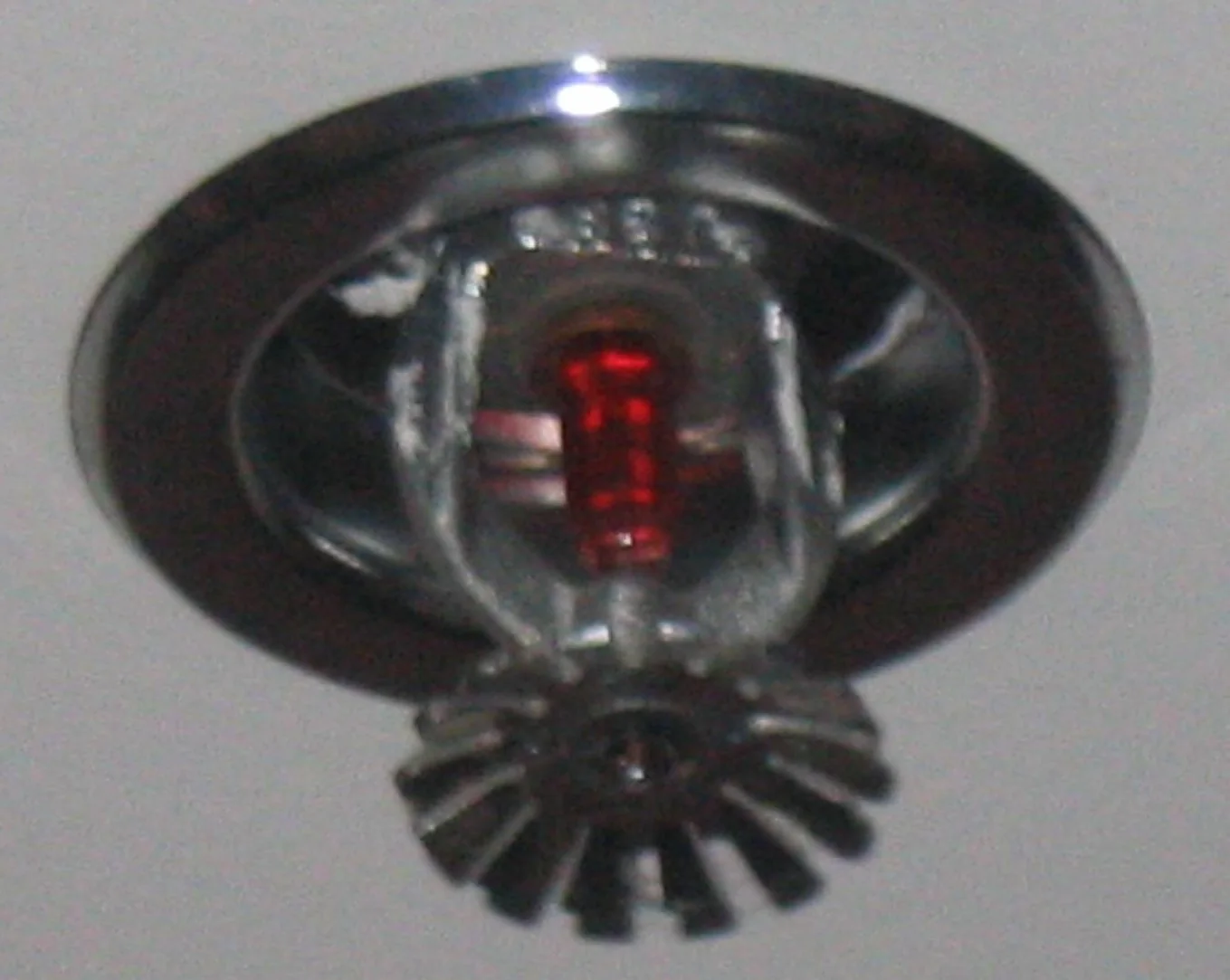
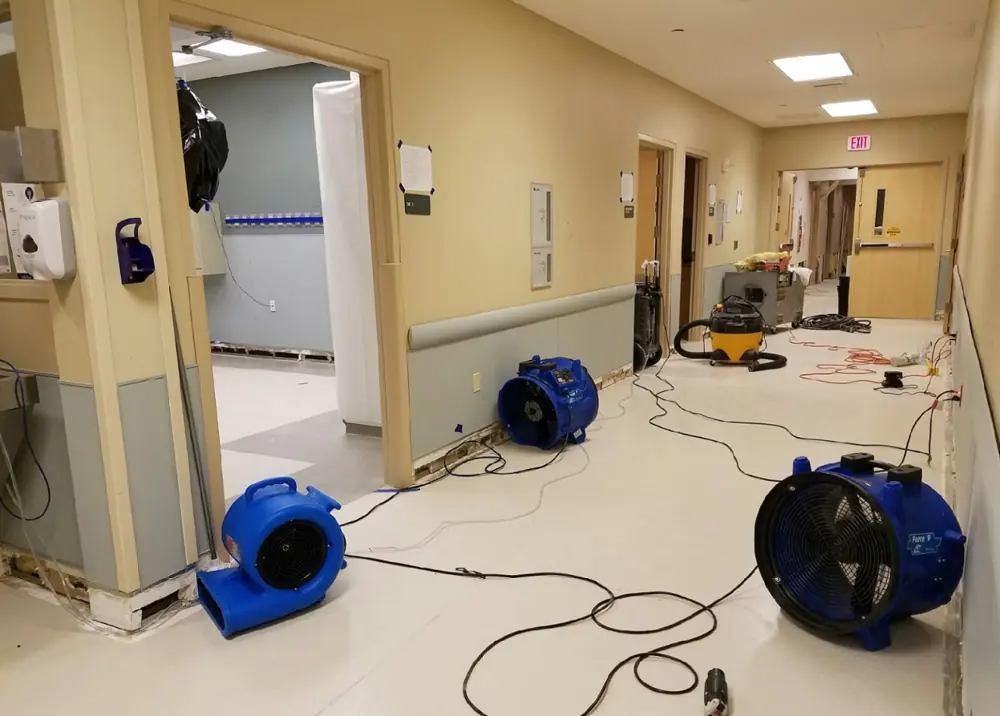
A single sprinkler head that trips accidentally in a San Mateo condo or apartment building can dump hundreds of gallons in minutes, often soaking the unit below before the water is shut off. A crew is typically on site within about an hour to extract and start drying across every affected floor.

A crew is typically on site within about an hour to shut off the water at the source and check every unit below and beside the discharge for damage.
Water is extracted from carpet, flooring, and ceiling cavities across every affected unit before it wicks further into shared building assemblies.
Thermal imaging traces water movement through shared floor and ceiling assemblies, since damage in a multifamily building rarely stays contained to one unit.
Air movers and dehumidifiers dry every affected unit to a verified target, with documentation prepared for the unit owners, property management, and any insurance claims involved.

While help is on the way, these first steps, done only where it is safe, limit the damage and protect the insurance claim.
Shut the supply off at the source, or close the home's main valve if the source is not obvious. Stopping the flow limits the damage more than anything else.
Switch off electricity to the affected area, but only if the breaker can be reached without standing in or touching the water.
Get a crew dispatched right away. The sooner extraction and drying begin, the more flooring, drywall, and belongings can be saved.
Take photos and a short video of the water and the affected rooms before anything is moved, so the insurance claim starts strong.
Fire sprinkler discharge cleanup for a San Mateo multifamily unit typically runs from about $2,000 to $10,000 or more when multiple units are affected, since a single discharge often means extraction and drying work in the unit itself plus at least one unit below. A discharge caught and shut off quickly with damage limited to one unit sits on the lower end, while water that spread through two or three units and their shared assemblies runs significantly higher. Costs and claims are often split between the unit owner's policy and the building's master policy, and thorough documentation supports whichever party is handling the claim.
Crews reach San Mateo and San Mateo County fast, from North Central, Hayward Park, and Aragon to Shoreview, Sunnybrae, and Hillsdale, plus nearby Foster City, Burlingame, and Belmont. See the full list on the areas served across San Mateo page.
See all areas servedEvery loss is photographed, measured, and logged from the first visit, so the paperwork holds up with the insurance carrier.
Technicians follow recognized IICRC drying standards and prove it with daily moisture readings on San Mateo homes, not guesswork.
Emergency dispatch any hour of the day or night, with a real crew on the way across the mid-Peninsula, not a callback in the morning.
A real crew dispatched any hour, not a callback in the morning.
Trained technicians following recognized IICRC drying standards.
Truck-mounted, portable, and submersible for any size loss.
The loss is documented and billed to the carrier directly.
Accidental discharges usually come from physical impact to the head, a manufacturing defect, or in rare cases extreme heat near the fixture from something unrelated to an actual fire, not a fire event itself.
Not always, but it is common. Sprinkler systems release a large volume of pressurized water quickly, and in a multifamily building that water usually finds its way through the floor assembly into the unit below unless it is caught almost immediately.
It depends on the building's governing documents and where the failure occurred, whether within a unit's own fixtures or the building's shared system. The crew documents everything so the responsible party or parties can be sorted out with property management and insurers.
Water sitting in a sprinkler system is generally treated as clean water since it comes from the domestic supply, though standing water is still extracted and materials assessed the same way as any other clean-water loss.
Yes, and it is usually necessary. Coordinating extraction and drying across every affected unit at once keeps the moisture from continuing to migrate between units while work is staged one at a time.
San Mateo crews are on call 24 hours a day, local and fast, and can be on the way within the hour.
Call (650) 281-0978