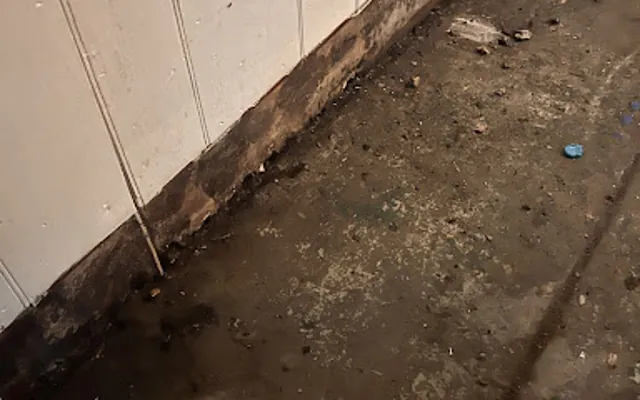
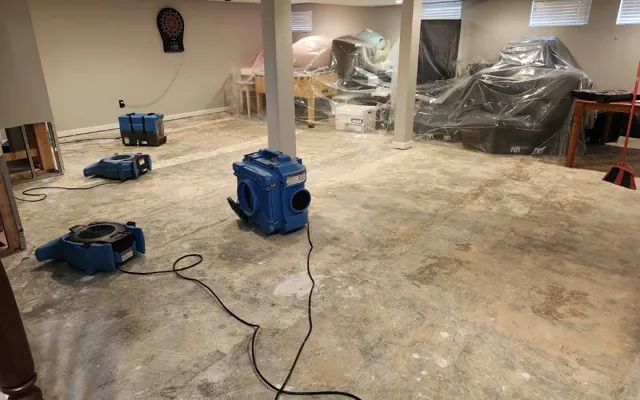
When a septic backup floods a San Mateo Park, CA home, local crews respond within about an hour to contain the contamination. They follow IICRC-standard methods for cleanup, removing damaged material and drying the structure to a verified target.

Upon arrival in San Mateo Park, technicians immediately work to contain the contaminated water. They set up barriers to prevent it from spreading into clean areas of the home, a critical first step in limiting damage and health risks.
The crew uses pumps and extractors to remove all standing water. Any porous materials like carpet, pad, or lower drywall that contacted the septic water are removed and bagged for disposal, as they cannot be adequately sanitized.
All affected structural surfaces and framing are thoroughly cleaned and sanitized to address the high contamination load. Then, professional drying equipment is strategically placed to begin the process of drying the space to a verified moisture target.

Septic backup cleanup typically runs from about $800 to $4,000, with the range depending on how many rooms were affected and how much material had to be removed due to contamination. A single bathroom backup on a hard-surface floor sits on the lower end, while a backup that reached carpeted living space or a finished lower level runs higher. This figure covers structural cleanup only, not tank pumping or drain field repair, which a septic service handles separately, and documented cleanup work can typically be submitted directly to the homeowner's insurer.
San Mateo Park's stately 1920s and 1930s homes, with their mature landscaping and original sewer laterals, are prone to septic tank backups when roots intrude. These backups introduce significant contamination into living spaces, requiring immediate containment and professional remediation to protect the home's structure and its occupants' health. In San Mateo Park, CA, aging sewer laterals from the original home construction often intersect with the extensive root systems of mature street trees. These roots can invade and block pipes, leading to backups. Period roofing can also fail during winter storms, contributing to system overload. From San Mateo Park, crews also cover nearby Baywood, Shoreview, Hillsdale, Sunnybrae, Hayward Park, Aragon. See every neighborhood and town on the full service area page.
See all areas servedEvery loss is photographed, measured, and logged from the first visit, so the paperwork holds up with the insurance carrier.
Technicians follow recognized IICRC drying standards and prove it with daily moisture readings on San Mateo Park homes, not guesswork.
Emergency dispatch any hour of the day or night, with a real crew on the way across the mid-Peninsula, not a callback in the morning.
A real crew dispatched any hour, not a callback in the morning.
Trained technicians following recognized IICRC drying standards.
Truck-mounted, portable, and submersible for any size loss.
The loss is documented and billed to the carrier directly.
Costs depend on the extent of contamination. A backup confined to a hard-surface bathroom may be on the lower end of the range, while one affecting carpeted living spaces or finished basements is higher. The figure covers structural cleanup to IICRC standard, not tank repair, which is handled separately.
Drying time depends on the materials affected, the extent of saturation, and indoor conditions. For a typical job in San Mateo Park, the process often takes several days. Technicians monitor moisture levels daily until the structure meets the verified dry standard before removing equipment.
Crews are on call 24 hours a day and can be on the way to San Mateo Park within the hour.
Call (650) 281-0978